

Essential Business Website Design in Kenya Guide
Planning, Costs, Ownership & Maintenance
A corporate website design in Kenya should do more than make your business look professional online. In today’s digital economy, it must act as a high-performing sales funnel that turns online traffic into qualified enquiries, bookings, sales, and measurable revenue.
If you are currently sourcing professional website design in Kenya, the real questions you need to answer are operational: What does custom website development in Kenya actually cost? What should it achieve? Who retains legal ownership of the digital assets? And what will it take to sustain high search engine visibility through website maintenance services in Kenya after launch?
This comprehensive guide outlines the critical decisions around strategic planning, deployment costs, brand ownership, and long-term optimization for ambitious Kenyan enterprises looking for a selling website design services
Quick Overview: Corporate Website Requirements & Costs in Kenya
| Website Type | Core Business Goal | Key Technical Features | Estimated Cost Range (KES) |
|---|---|---|---|
| Corporate Business Website | Lead Generation & Credibility | Services Pages, Contact Forms, Local SEO Optimization, WhatsApp Chat | KES 40,000 – KES 85,000+ |
| E-commerce Website | Direct Online Sales | Shopping Cart, User Accounts, M-Pesa Integration (Daraja API) | KES 70,000 – KES 200,000+ |
| Custom Web Application | Advanced Operations & Portals | Automated Workflows, Custom Database, API Syncing, Client Portals | KES 250,000+ |
1. Start With a Clear Business Goal
Before hiring website developers in Kenya or approaching a web design company in Nairobi, you must define your primary conversion goal.
Your objective could be to generate B2B enquiries, showcase real estate portfolios, sell retail products, capture email leads, or drive physical foot traffic to your storefront.
The business goal dictates the system architecture:
- A professional consultancy requires dedicated service landing pages, dynamic enquiry forms, and strict local SEO formatting.
- An online retail brand requires scalable e-commerce website development, featuring product catalogues, secure checkout funnels, and automated payment gateways.
Aligning on goals early prevents scope creep and ensures your developer builds for return on investment (ROI).

2. Secure Your Domain and Secure Web Hosting in Kenya
Your domain name is your permanent digital address (e.g.,
yourbusiness.co.ke).- Targeting Locally: If your core consumer base resides within the country, a .co.ke domain is highly recommended. It signals local relevance to search engines and builds immediate trust with Kenyan consumers.
- Targeting Globally: A .com domain is ideal if you plan to expand internationally. Note: Domain extensions do not limit your technical capabilities—a .com website can integrate local payment gateways just as seamlessly as a .co.ke extension.
Critical Rule: Always ensure your domain is registered under an account controlled directly by your internal team, not the personal account of an external vendor.
When evaluating options for secure web hosting in Kenya, prioritize server uptime, loading speeds, localized customer support, automated daily backups, and included SSL certificates over the lowest price point.
3. Design for Mobile-First, Speed, and AI Search Accessibility
The top website designers in Kenya build with a mobile-first mindset. Because the vast majority of Kenyan internet users access the web via smartphones, your site must feature fully responsive layouts, clean navigation, and lightweight code that loads rapidly even on slower mobile networks.
Furthermore, structuring your site for modern Generative Engine Optimization (GEO) is crucial. AI search tools pull data from highly accessible websites. To ensure your business is recommended by AI engines, use clear typographic hierarchies, descriptive image alt text, and clean, schema-mapped layouts.
4. Build High-Converting Core Pages
Your website needs to instantly answer three fundamental user queries: Who are you? What specific problem do you solve? What action should the visitor take next?
To maximize conversions, every corporate site should include these foundational pages:
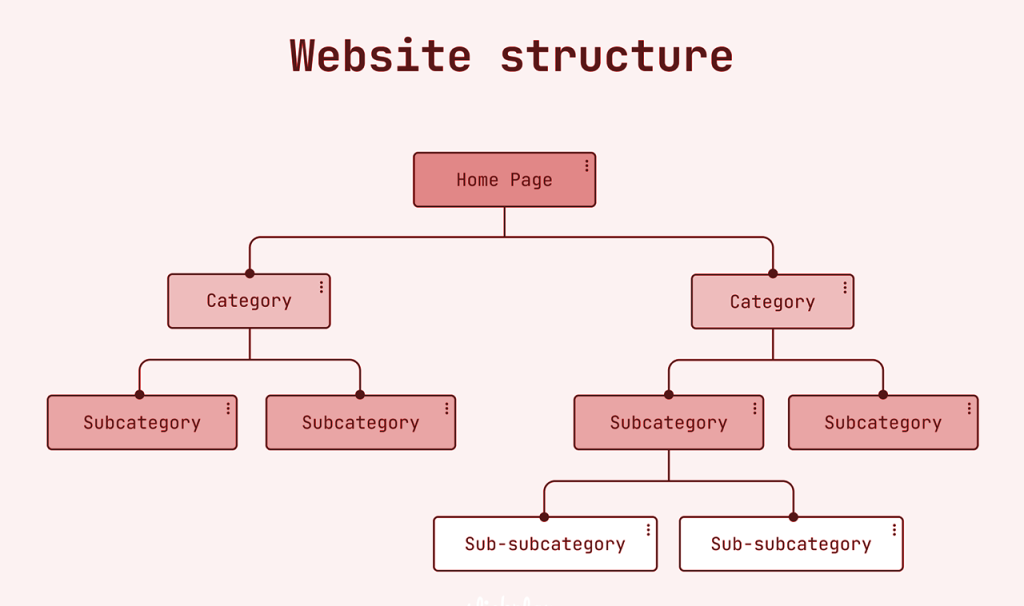
- Home Page: A high-impact introduction featuring your core value proposition, prominent trust signals, and a clear Primary Call to Action (CTA).
- About Us Page: A detailed overview of your company history, executive team, compliance licenses, and competitive advantages.
- Services / Products Pages: Detailed descriptions of your offerings, structured with clear headings that highlight the exact value the client receives.
- Contact Page: Complete corporate transparency including verified phone numbers, official emails, physical office locations, interactive Google Maps, and direct WhatsApp business links.
- FAQs Page: Direct answers to common customer objections, which helps shorten the sales cycle and provides excellent text snippets for AI search engine extraction.
Important: Website Design Guide 2026
5. Plan Content Architecture and Local SEO From Day One
A beautifully designed website is useless if your target audience cannot find it. For businesses investing in website development in Kenya, search engine optimization (SEO) must be baked into the foundational code, not treated as an afterthought.
High-yield SEO strategy requires:
- Naturally integrating localized keywords (e.g., “best web design company in Nairobi” or “corporate website design price”) into your headings, body text, and URLs.
- Writing compelling meta titles and meta descriptions to improve click-through rates (CTR) from Google search pages.
- Configuring Google Search Console and Google Analytics 4 (GA4) immediately upon launch to actively track keyword impressions, user behavior, and goal conversions.
6. Integrate Seamless M-Pesa and Online Payments
For modern Kenyan businesses, providing frictionless payment options directly correlates with higher conversion rates.
Integrating M-Pesa website integration via Safaricom’s Daraja API or reputable third-party payment gateways allows customers to prompt an instant STK SIM Toolkit push on their phones. This eliminates the outdated, friction-heavy process of manually copying Lipa na M-Pesa till numbers and sending transaction screenshots.
During the development phase, thoroughly test transaction flows including successful payments, timed-out sessions, automated PDF invoicing, and real-time merchant portal reporting.
7. Enforce Airtight Security and Data Privacy Compliance
Website security is a foundational business requirement. With strict local data protection laws enforced by the Office of the Data Protection Commissioner (ODPC) in Kenya, safeguarding user data is a legal obligation.
Ensure your website deployment includes:
- Mandatory HTTPS data encryption via an active SSL Certificate.
- Rigorous firewall protection, strong administrative password protocols, and two-factor authentication (2FA).
- A transparent Privacy Policy page explaining exactly what user data (such as names, emails, and phone numbers) is collected, how it is safely stored, and how it is utilized.

8. Benchmark Realistic Website Design Costs in Kenya
The total corporate website design price varies widely based on functional complexity, custom asset creation, and database requirements.
When evaluating proposals from agencies or independent website developers in Kenya, verify exactly what is included in the line-item quote. A comprehensive professional proposal should explicitly state coverage for:
- Domain registration and initial hosting setup.
- Premium theme/framework licensing and custom UI/UX design phases.
- Foundational Local SEO and structural optimization.
- API setups (such as M-Pesa or CRM systems).
- A dedicated post-launch warranty and handover period.
Avoid choosing a vendor purely on the lowest bid. A cheap, poorly coded website frequently results in hidden costs down the road due to security vulnerabilities, broken code, and missing optimization.
9. Retain Full Corporate Ownership of Digital Assets
Ensure your business retains legal ownership and administrative access to all digital infrastructure before signing any service-level agreement (SLA).
Your enterprise should hold primary administrator credentials for:
- The domain registrar portal.
- The web hosting cPanel or cloud server platform.
- The website Content Management System (CMS) super-admin dashboard.
- Linked tracking accounts (Google Analytics, Google Search Console, Meta Pixel).
- All associated merchant payment gateway accounts.
Ensure your development contract explicitly specifies that all custom source code, design assets, and database rights transfer completely to your business upon final milestone payment.
10. Maximize ROI With Consistent Website Maintenance Services
Launching your website is simply the first milestone. To maintain top keyword rankings, protect against malware, and optimize user experience, your site requires ongoing technical attention.
Proactive website maintenance services in Kenya should encompass:
- Core Software Updates: Regularly updating the underlying CMS platform, plugins, and PHP versions to prevent security exploits.
- Link & Form Testing: Routinely checking contact forms, checkout pathways, and WhatsApp click-to-chat links to ensure zero disruptions in lead flow.
- Performance Audits: Deleting database overhead, compressing newly uploaded media assets, and monitoring mobile page-load speeds.
- Data Backups: Maintaining off-site cloud backups to guarantee instant recovery in the event of an unexpected technical outage.
By treating your corporate website as an evolving business asset, continually refining its content, analyzing performance data, and maintaining its underlying health then your platform will consistently generate new leads, protect your brand equity, and drive sustainable business growth.
Frequently Asked Questions (FAQs)
Can I use M-Pesa on a .com website?
Yes. Your domain extension does not determine whether payment systems can be integrated. Professional M-Pesa website integration relies purely on technical backend configuration and business credentials (such as Safaricom’s Daraja API). A .com website can process local mobile money transactions just as efficiently as any other domain.
Should I choose a .co.ke or .com domain?
If your primary target audience and operations are localized within the country, a .co.ke domain is highly recommended because it strengthens your local SEO presence and signals trust to Kenyan consumers. A .com domain is more suitable if you are targeting international customers or scaling a global brand footprint.
How much does website design cost in Kenya?
The total corporate website design price varies depending on functional complexity, page count, custom UI/UX design, required copy, payment integrations, and technical features. When sourcing proposals from website developers in Kenya, it is critical to compare quotations based on the comprehensive value and services included rather than selecting a vendor based solely on the lowest price.
Who should own my website?
Your business should retain 100% legal ownership and administrative control over all digital infrastructure. This includes primary super-admin access to the domain registry, secure web hosting Kenya accounts, CMS dashboards, and linked analytics tools like Google Search Console and GA4. Your chosen web design company in Nairobi can manage these assets for you, but they should never be the permanent legal owners.
How often should a website be maintained?
To protect your digital investment, foundational updates should occur continuously, with deeper technical audits performed monthly. Reliable website maintenance services in Kenya ensure that core CMS software is updated, security firewalls are active, contact forms and WhatsApp links function correctly, cloud backups are stored safely, and site speeds remain optimal for search visibility.
Are you planning a website for your business? Talk to us for website consultation and quotation.